

The PACT© Trust-Building Framework
Most organisations know they have a trust problem. Few have a framework for solving it.
The PACT© gives L&D, leaders, and HR professionals something specific, evidence-based, and
behaviourally grounded to work with.
What is The PACT©?
The PACT© is a behavioural, evidence-based framework, underpinned by a strengths approach and grounded in research. It enables individuals, teams, leaders, L&D professionals to use it as a stand alone intervention to identify and encourage trust-building strengths behaviours, or as an integrated workshop into other leadership and team-building programmes.
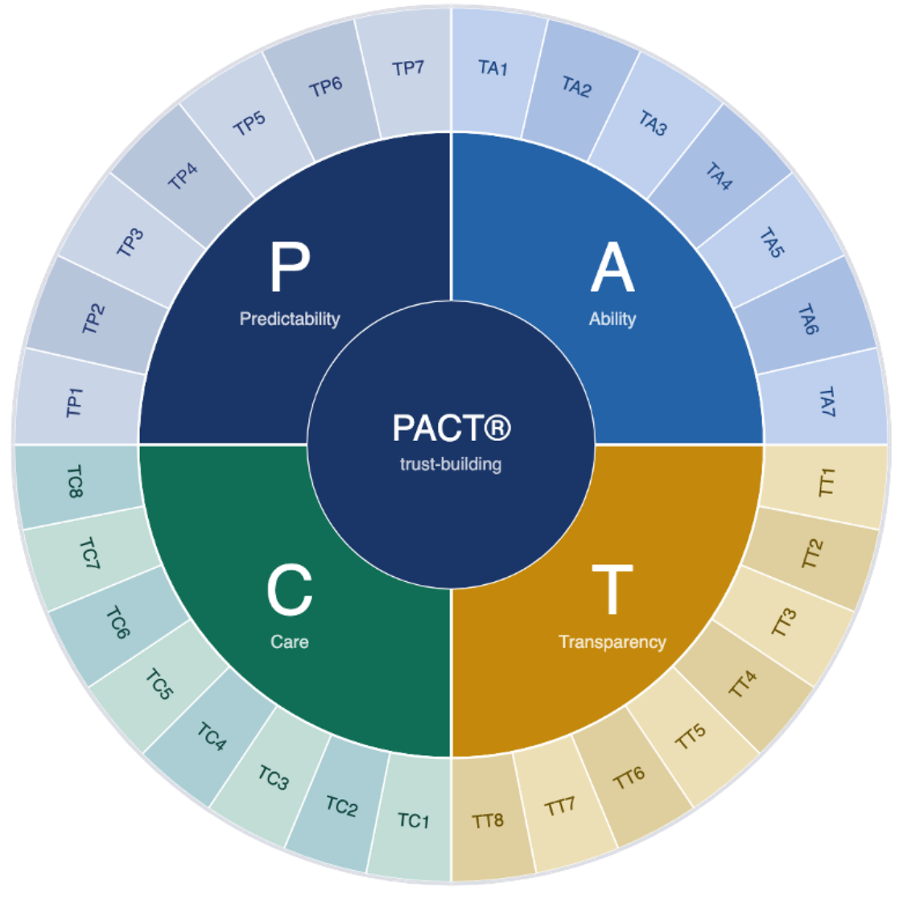
What each domain means
P — Predictability
People know what to expect from you. Your standards are consistent. Your commitments mean something. You show up the same way.
A — Ability
You are capable & competent in the things that matter most to your role & your relationships. You are honest about what you don't know.
C — Care
You have others' interests genuinely at heart - not as a performance, but as advocacy, recognition, attention- in small, consistent acts.
T — Transparency
You communicate honestly and openly, even when it is uncomfortable. You don't hide your reasoning, your concerns, or your mistakes.
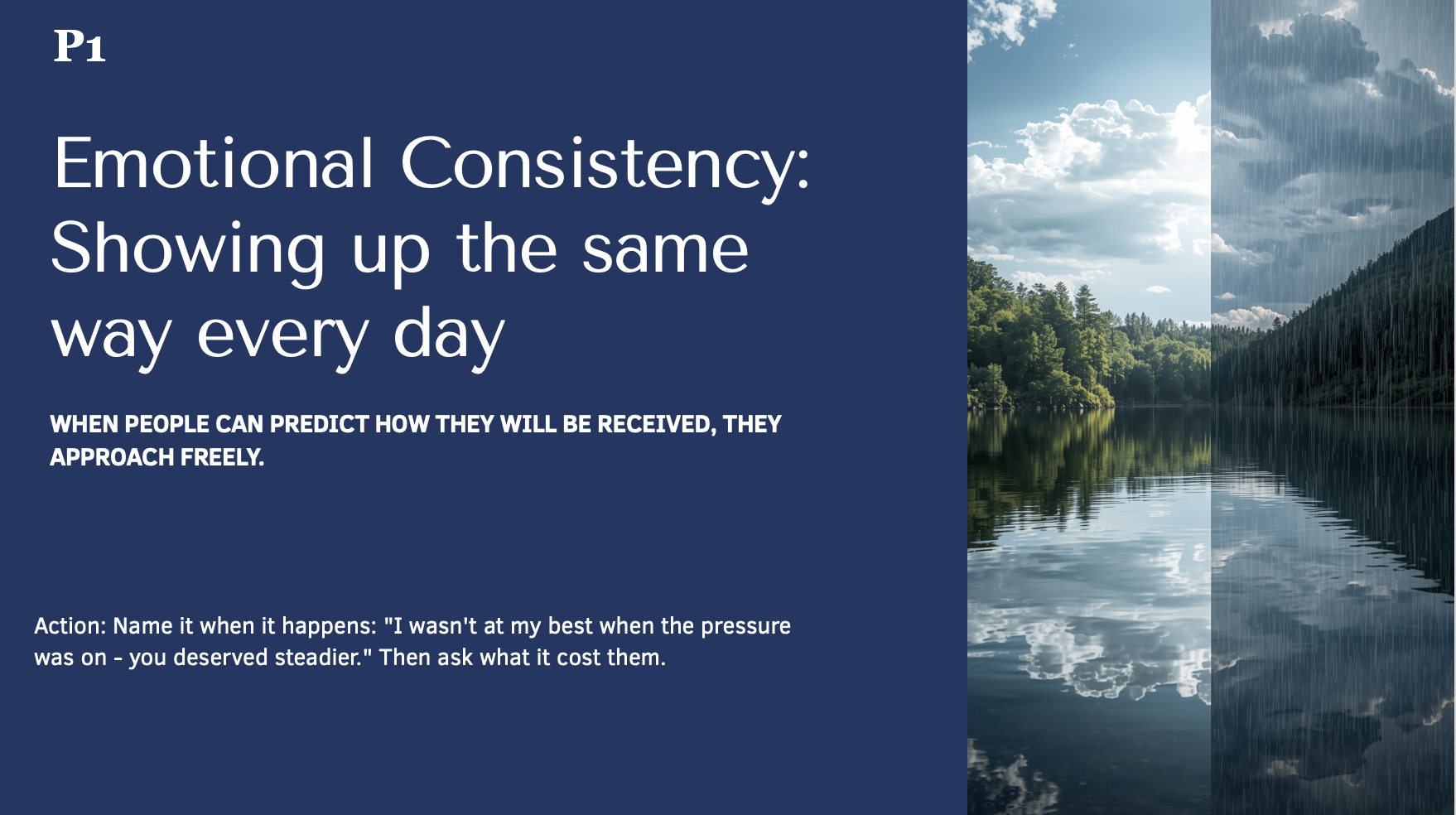
The Workshop Experience
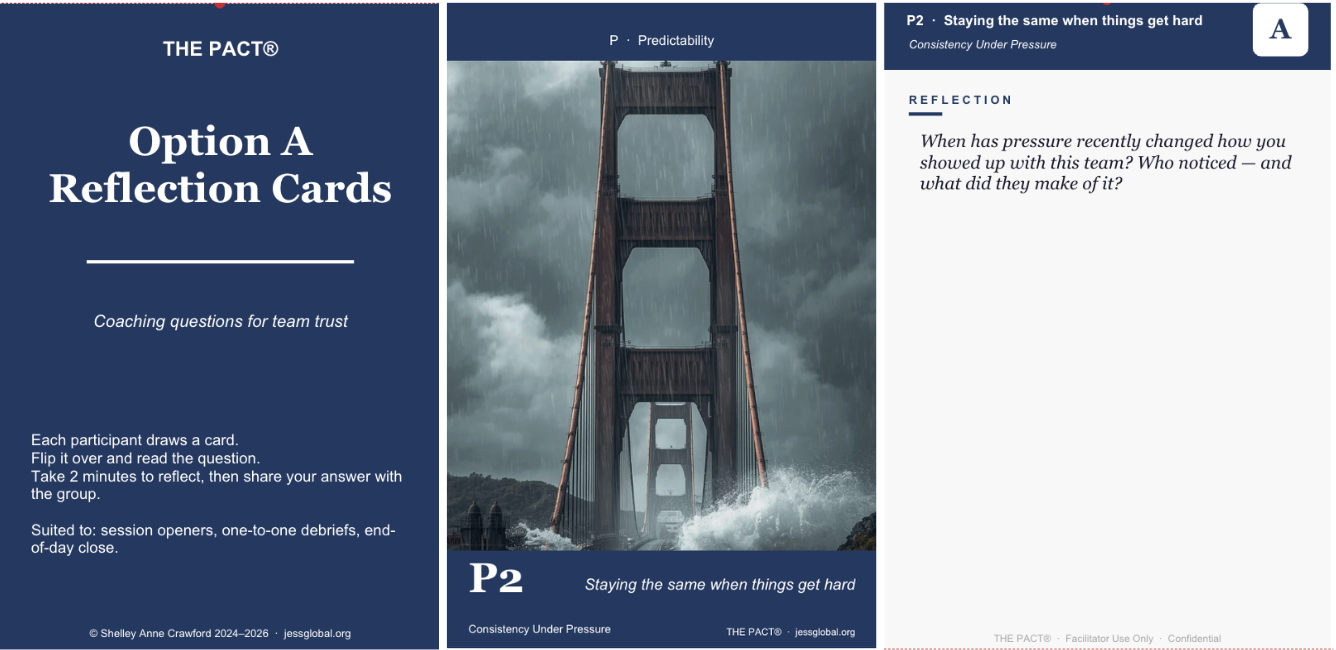
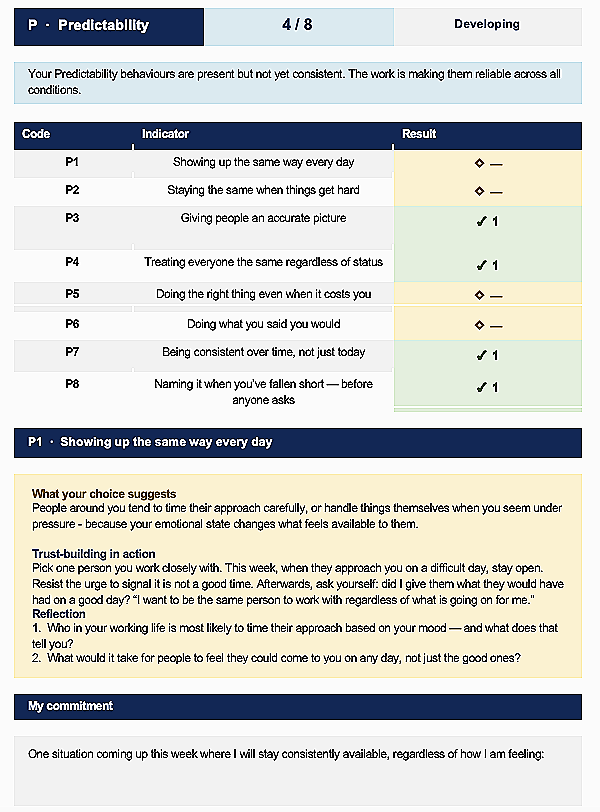
Interactive, reflective, and evidence-based — PACT® workshops combine visual materials, reflection cards, and facilitated group discussion with an individual debrief on each participant's Trust-Building Strengths profile.
Working with The PACT© - the assessment tool
Participants complete the inventory individually before the workshop and team session. There are 3 inventories: Individual Professional, Team Professional, and Personal Relationship. Inventories are paper-based and online.
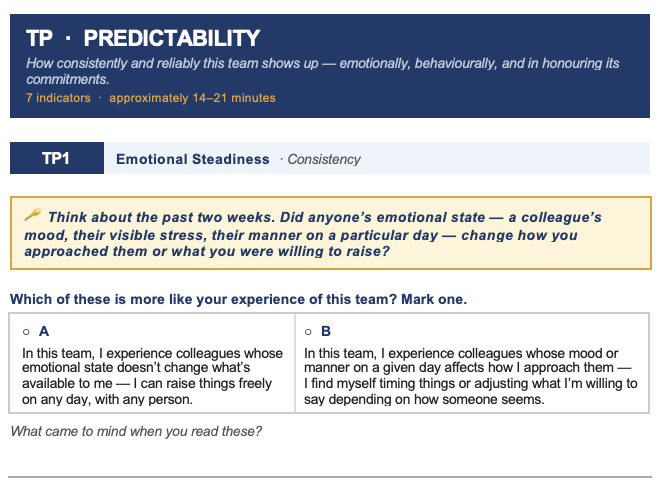
What this means for your organisation - the report
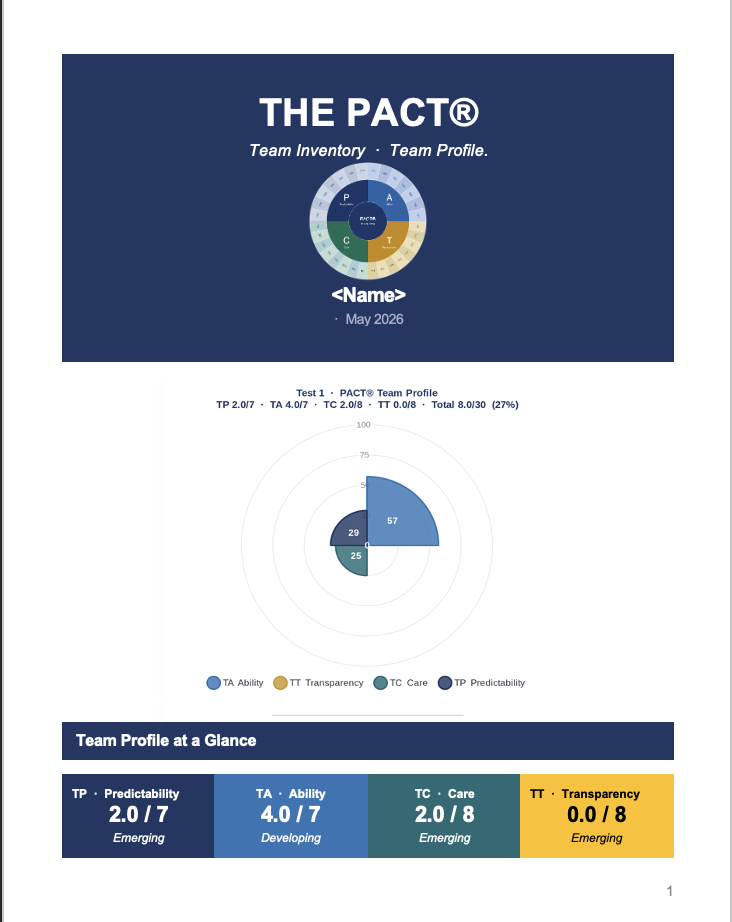
Each participant receives an individual profile report and, if applicable, a team version. Individual and Team results are aggregated and facilitated by Shelley. For L&D and HR professionals, it offers:
A common language for trust that leaders, teams, and coaches can use consistently across an organisation.
A behavioural lens that moves trust conversations from the abstract to the specific - from "we need to build trust" to "here is what that looks like in practice."
A diagnostic instrument - the PACT© Trust-Building Strengths Inventory - that gives individuals and teams a clear picture of where their trust-building strengths lie and where development is needed.
The PACT© framework is available as a facilitated programme, a leadership development module, and a coaching tool for use with individual leaders and teams.
The PACT© in practice
The PACT© Trust-Building Strengths Inventory and its associated workshops have already been piloted and used with leaders and teams across a range of organisational contexts — including leadership development programmes, executive coaching, and coach supervision.
The framework has been tested, refined, and validated through real-world application. What you find in the book is not an untested theory. It is a framework that has already been put to work.
The PACT© book - publishing 22 Aug 2026
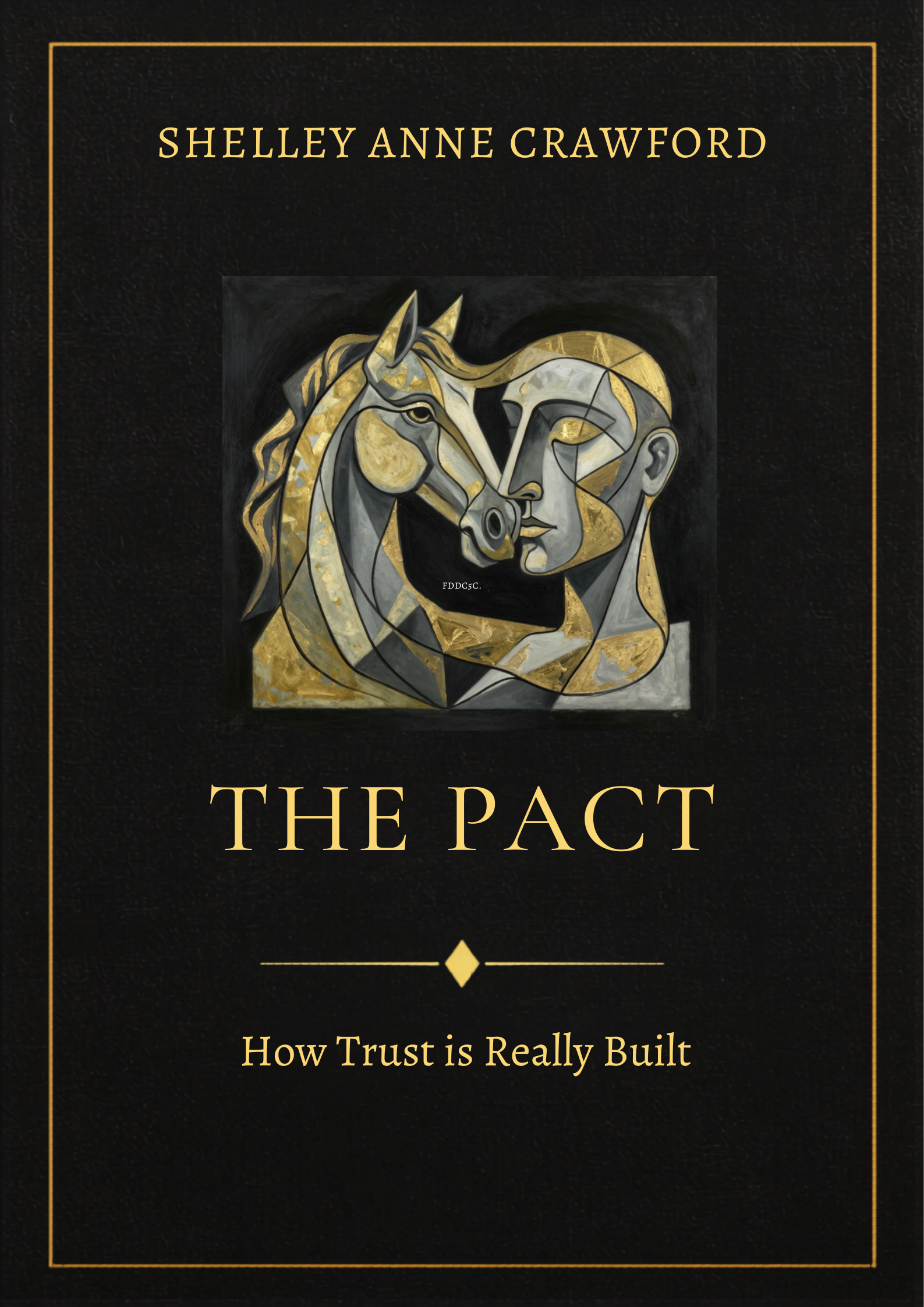
The PACT©: How Trust is Really Built
The book brings together everything the framework is built on — the research, the thirty-two indicators, the dimension profiles, and the development work — in a form that leaders, coaches, and HR professionals can use independently of a facilitated programme.
It is written for practitioners who want to work seriously with trust: to diagnose it, develop it, and sustain it in the environments they work in. It is also written for anyone who has ever wondered why some relationships hold under pressure and others don't.
Release date: 22 August 2026
Hardback · £24.99 · ISBN 978-1-0666696-0-8
Paperback · £14.99 · ISBN 978-1-0666696-1-5
eBook · £9.99 · ISBN 978-1-0666696-2-2
Available to order through your local bookshop, major retailers, or direct from the publisher at josspublishing.com
Subscribe to Between the pieces - my Substack publication on trust, resilience, and leadership - receive snippets of chapters from the books.
“Trust is not a foundation. It is a response”